
Find the Right Starting Point for Your Liquidity Question
Estate liquidity is about cash for an estate’s payments when due. Choose a starting point, prepare a conversation, or look more closely at a proposal.
New to the question? Understand cash needs, access to funds and the choices worth discussing.
Preparing for a meeting? Organize your questions, identify who can answer them and agree a next action.
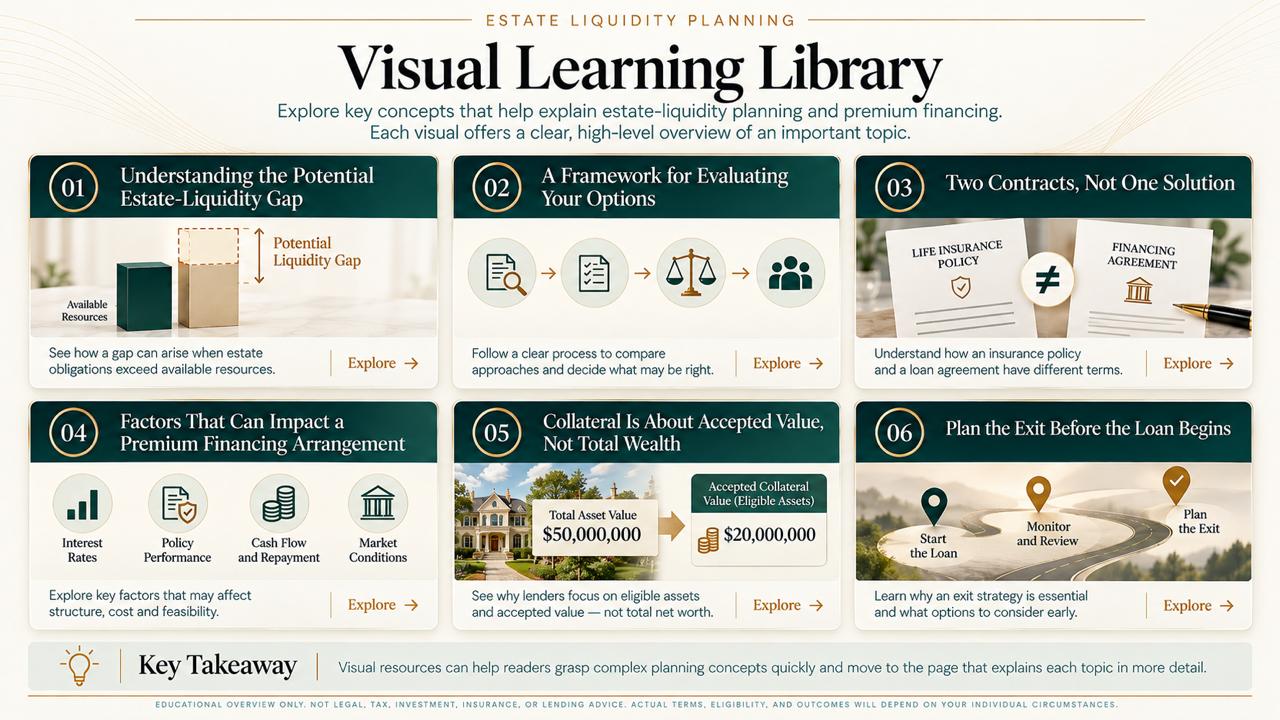
A strong balance sheet doesn't answer every cash question
Choose the ownership situation closest to yours. Neither route assumes you need insurance or should keep every asset.
- Business owners: value, succession and funding — When company ownership is a large part of your wealth, examine how transfers, buy-sell commitments and operating needs relate to available cash.
- Real estate investors: equity, reserves and timing — When property holds much of your wealth, consider debt, co-ownership and the cash available before or after a sale.
If your concern is potential estate-tax exposure, explore estate-tax liquidity and funding alternatives. Estate tax is one possible cash need, not the definition of estate liquidity.

When you work with clients
For attorneys, CPAs, wealth advisors, bankers and family-office professionals, start with the task at hand.
- Advisor collaboration: clarify the insurance role — Before involving another professional, understand Marc’s bounded contribution and where existing advisors retain their responsibilities.
- Advisor due diligence: evaluate a proposed strategy — When a proposal is on the table, examine its assumptions, alternatives, incentives and unresolved questions.

If borrowing to pay insurance premiums is being considered
This is a separate decision from whether insurance is appropriate. Use only the depth relevant to your question.
- Understand the arrangement: Premium Financing Explained separates the policy from the loan and explains their interaction.
- Examine what could change: Premium Financing Risk Management addresses changing costs, policy assumptions and review questions.
- Test the ability to respond: Collateral & Stress Testing explores accepted collateral, available reserves and several adverse changes occurring together.
- Consider how borrowing ends: Exit Strategies examines repayment sources, timing and alternatives if the expected exit changes.

Choose your next step
Keep learning with the Estate Liquidity Guide, or take the discussion questions to your existing advisors.
If an insurance-related cash question needs a separate conversation with Marc, request an Estate Liquidity Consultation. You do not need to arrange a meeting to use these resources.