
Premium Financing Risks Deserve More Than a Starting Illustration
The important question is not only whether the arrangement works today. It is what you would need to do if the assumptions change.
Premium financing adds a loan to an insurance decision. It may leave more cash available at the outset, but it also creates obligations that can last beyond the original expectations. Reviewing those obligations does not eliminate risk. It helps make the next decision clearer.
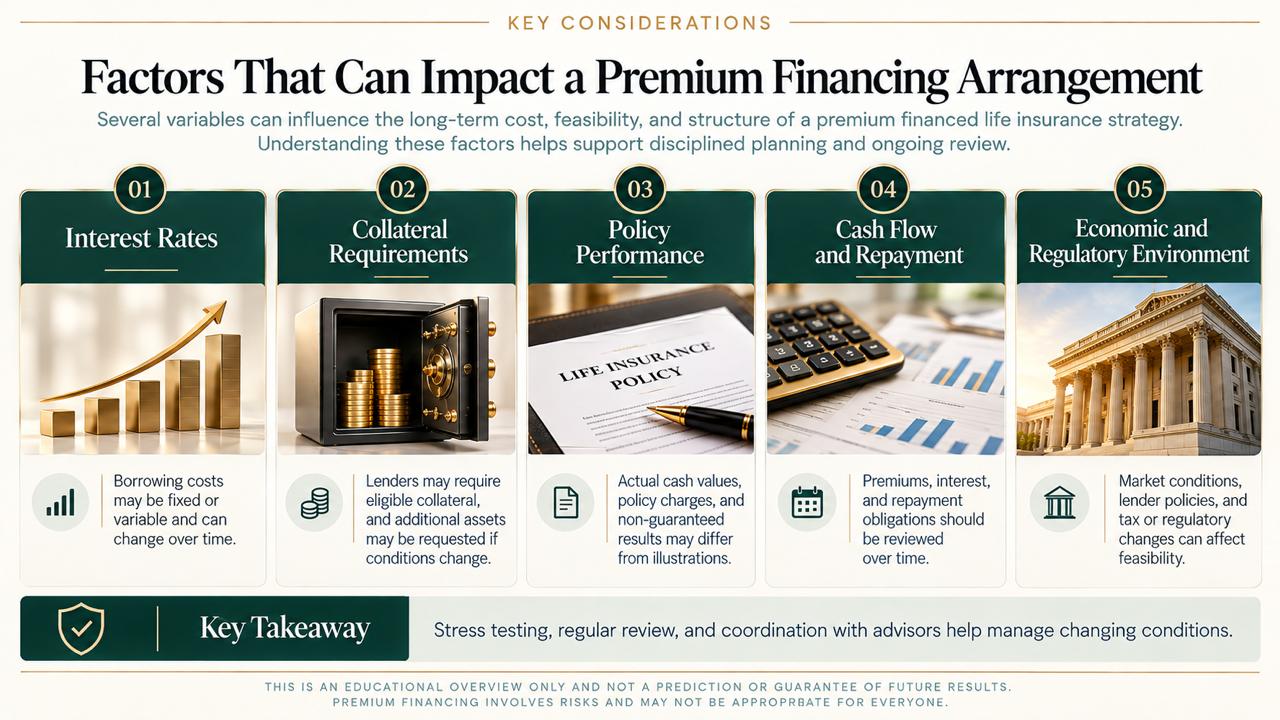
Start with the reason for borrowing
The insurance should address a genuine need. Financing then needs its own justification compared with paying premiums directly or making a smaller commitment.
If the arrangement requires favorable assumptions simply to remain affordable, more frequent reviews will not solve that weakness. The family and its advisors may need to reconsider the borrowing, the coverage or the original funding approach.

The variables that deserve attention
Borrowing costs and available cash
Check when interest is payable and whether the rate can change. A higher rate may require more current cash. If the agreement allows interest to be added to the balance, the debt can grow instead.
Ask where that money would come from after other commitments are met. A business distribution already needed for living expenses is not a second source for loan payments.
Policy results
Separate contractual guarantees from illustrated values that are not guaranteed. Depending on the policy, dividends, credits, charges and funding choices can affect results. Obtain current carrier information and, where available, an updated in-force illustration showing the existing policy.
The policy should be examined on its own terms. A projected gain is not a promise to cover interest or repay the lender.
Collateral and concentration
The lender may require assets outside the policy. If their accepted value falls, the agreement may require additional support or repayment. The borrower needs to understand the response deadline and the consequences of not meeting it.
Concentration deserves special attention. If the same business supports interest payments and the planned exit, a setback may weaken both at once. Listing two repayment sources does not make them independent if they rely on the same event.
Lender terms and renewal
Read the commitment, maturity date, reporting duties and renewal conditions. A policy intended to last for life does not mean credit has been committed for that long. Renewal or a replacement loan may be unavailable or offered on different terms.
Identify what must happen before another premium is funded. Do not confuse an expected advance with an approved one.
Implementation and contractual limits
Coverage, credit and collateral arrangements have separate requirements. Before relying on the structure, establish which approvals remain open, when coverage takes effect and who has authority to sign or pledge assets.
Carrier obligations and lender obligations also come from different contracts. Approval by one does not certify the other, and a proposal cannot replace the governing documents.
Repayment timing
An asset sale may take longer than expected. Policy values may not provide the anticipated funds. A loan maturity can arrive while the insured is alive.
Identify a fallback that addresses the timing as well as the amount. Examine the repayment paths before treating any future event as a solution.
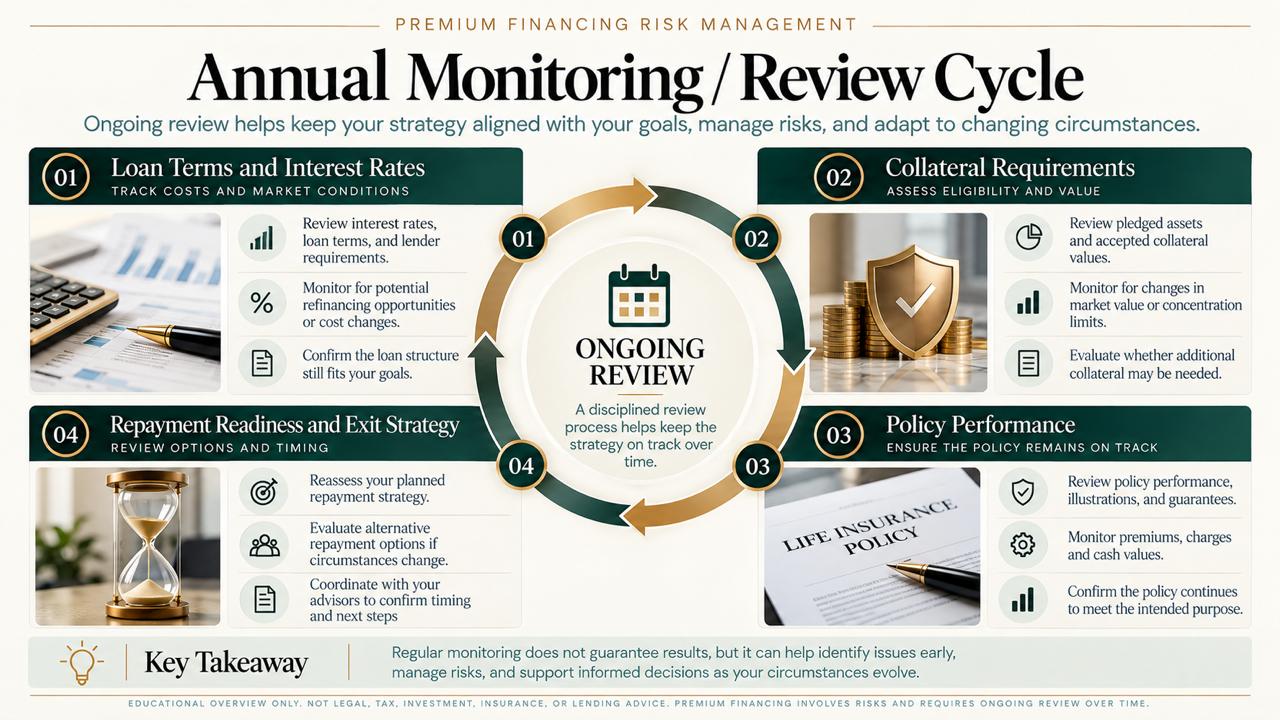
Consider changes together
Imagine borrowing costs rise while non-guaranteed policy values lag behind the original illustration. At the same time, a business sale is delayed. More cash may be needed while the expected source is less available.
This is a conceptual scenario, not a forecast or a client result. Its purpose is to ask: what remains affordable, which assets remain accessible, and who could authorize a response?
A useful discussion connects amount, timing, access, obligations, change and exit. It does not need a branded score. It needs assumptions that can be inspected and a response that is more specific than “we will review it later.”

Make continuing review practical
Agree on responsibility before implementation. The following are review inputs, not a promised SPF service package.
Information to keep current | Decision it supports |
Loan balance, payments and upcoming dates | Whether cash is available before an obligation falls due |
Current policy information and relevant guarantees | Whether coverage and funding expectations still fit |
Lender-recognized collateral and assets available outside it | Whether additional support could be provided |
Repayment source, timing and fallback | Whether the exit remains credible |
The schedule should reflect the actual contracts and exposure. A planned periodic meeting is not a reason to wait after a lender notice, missed payment, material policy change or loss of a repayment source.

Know when to reconsider
Bring a decision forward if the arrangement begins using reserves needed elsewhere, the collateral response is unclear, or the fallback relies on another favorable assumption. Revisit it when the insurance need or the family’s priorities change, too.
Possible responses require review rather than automatic action. Paying down debt, changing future funding or considering an exit can each affect cash, coverage and contractual obligations. Stopping premiums or surrendering a policy without understanding those effects can create another problem.

Keep professional responsibilities clear
Marc Setton, Estate Liquidity Strategist, brings an insurance-focused perspective alongside existing advisors. Counsel addresses legal authority and documents; the CPA or tax professional addresses tax implications; the wealth advisor evaluates investment choices. Carrier and lender participants establish their respective terms. The authorized owner or borrower makes the relevant decisions with that advice.
Any continuing SPF work would need a separately agreed scope. This page does not offer annual monitoring, collateral management or a formal risk-review service.
Review the advisor due-diligence questions or discuss an estate-liquidity question.
Marc does not charge a separate planning or advisory fee for this work. He is compensated when an insurance transaction is implemented, under the applicable insurance compensation arrangement. Understand compensation and conflicts.